
Help to identify marine mammals in Svalbard : read
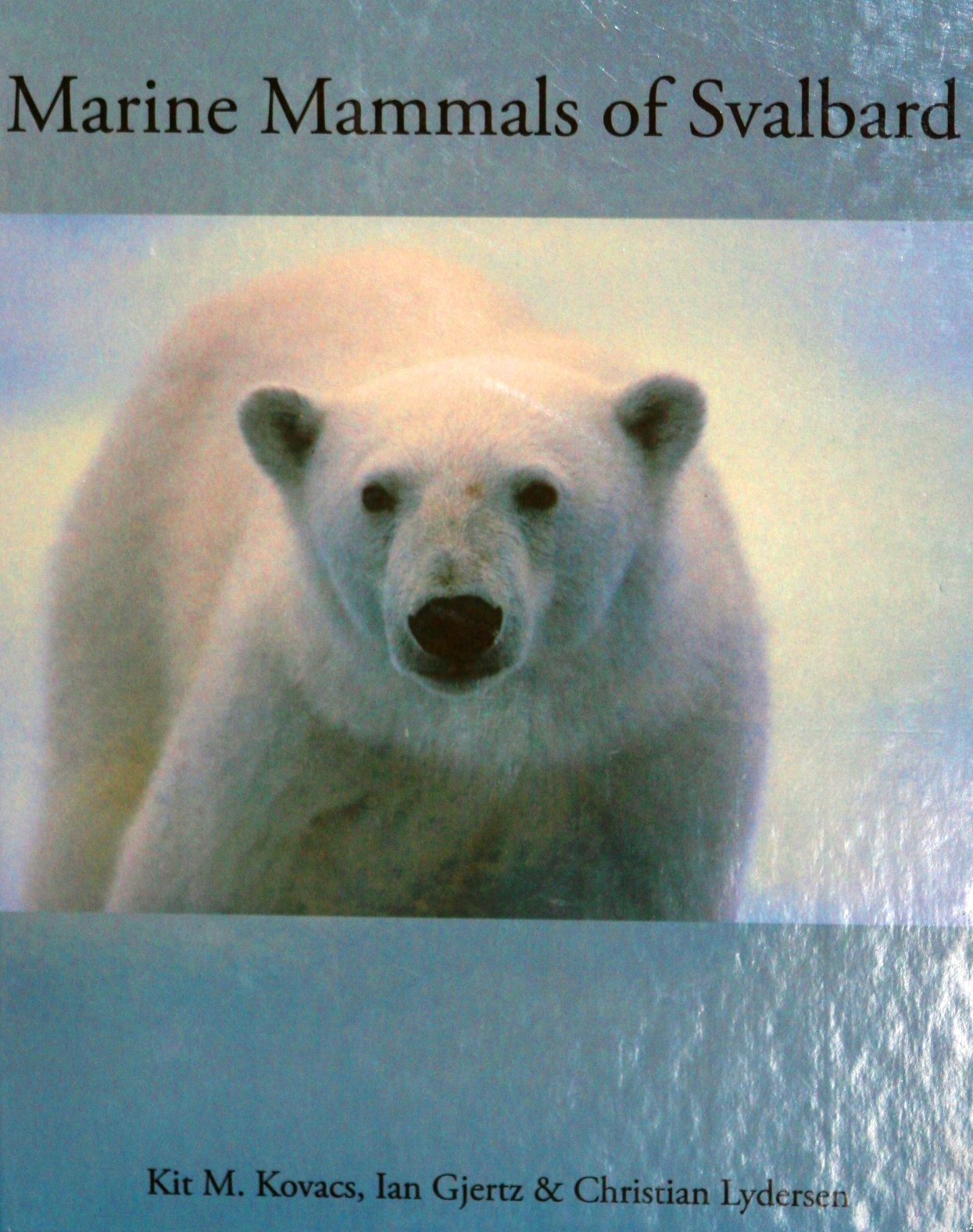
MARINE MAMMALS OF SVALBARD – KIT M. KOVACS, IAN GJERTZ & CHRISTIAN LYDERSEN – NORWEGIAN POLAR INSTITUTE – GRAFISK NORD, June 2004 – 64 p.
It’s an excellent educative guide which will help one to identify and observe during his stay in Svalbard all different species of marine mammals swimming in its waters. Each species is described with great detail (name in different languages, its habitat, its distribution, its abundance, its reproduction, its current status in Svalbard…) – pictures will help one not to confuse with other species.
An ID sheet (with photos and names) of all marine mammals will be found in the book in order to serve your marine observations.
In order to better understand how species are evolving in their biotope, Kit Kovacs et Christian Lydersen are inviting you to report your observations and analysis (name of the species encountered, its GPS location, date of sight, numbers, your comments) by sending the data sheet located at the end of the bock at the following addresses :
Kit.Kovacs@npolar.no or Christian.Lydersen@npolar.no
Drs Kit M.Kovacs & Christian Lydersen
Svalbard Visitors’ Marine Mammal Sighting Data Base
Norwegian Polar Institute
9296 Tromso
Norway
Each expedition is then essential : you can thus help them and be sure that it will bring to your own adventure an additional touch of excitement and attention…
” …the blue whale is the largest animal ever to have lived on earth. In the Northern Hemisphere blue whales arec 24-28 m long. Estimated weights as high as 200 tonnes have been recorded (based on body measurements). The blue whale’s mottled colouration, which is a mix of light and dark patches of slate grey, often appears to be various shades of blue when seen through water…Blue whales were taken to the brink of extinction by commercial whaling and they remain endangered. The global population size is not known, but it is likely that the number is somewhere near 6.000 animals. In the whole of the North Atlantic there are between 600 and 1500 blue whales. Population sizes are vague because sightings are rare…p.45,46”
Surf on our category “reading tips and recommandations”, GO >>

